 By
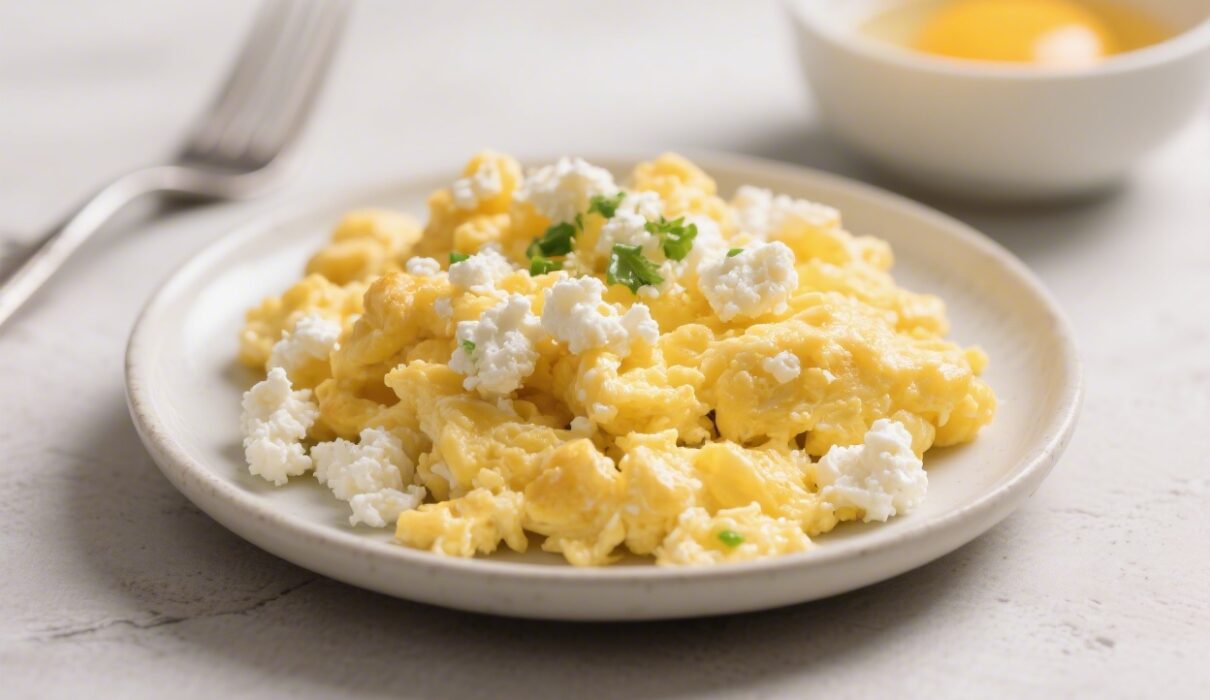
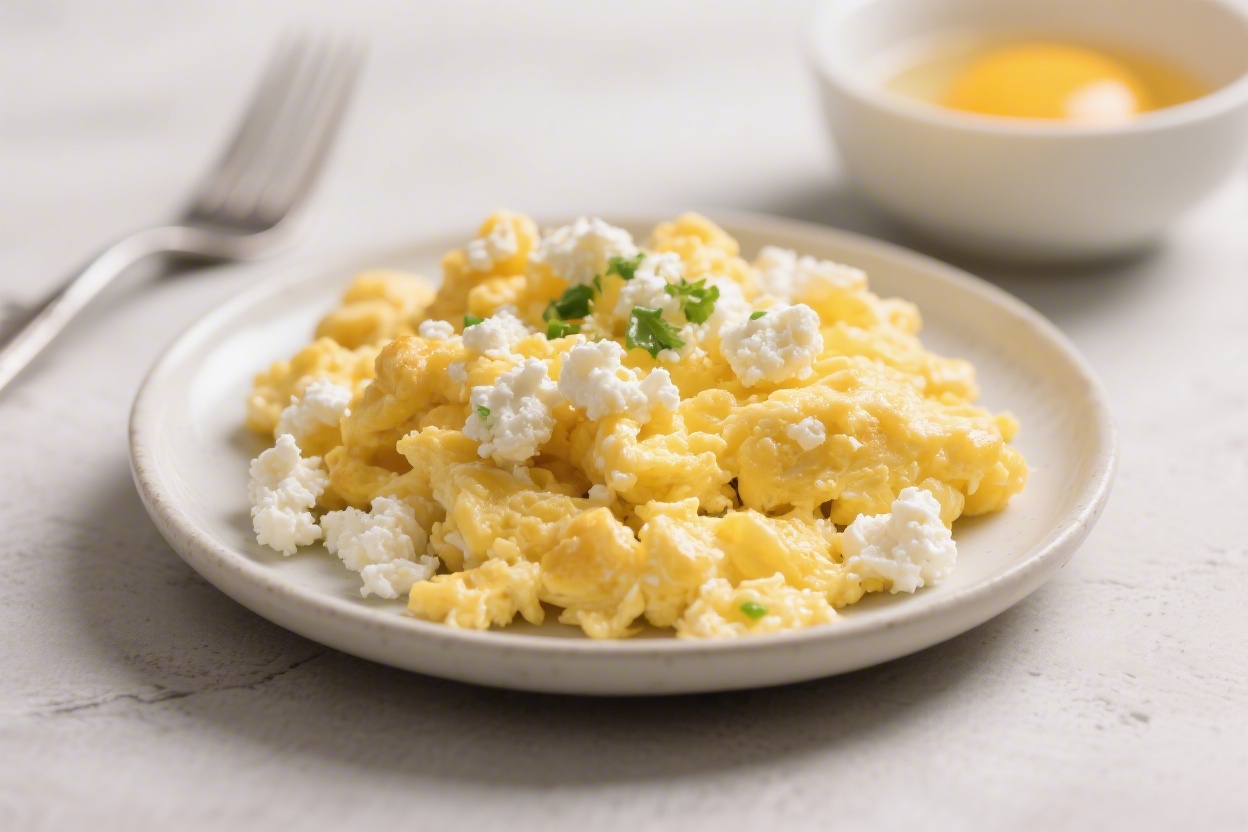
By These scrambled eggs are the kind of breakfast you can make when you’re hungry and short on time—but still want something that fuels your day. Cottage cheese melts right into the eggs, making them extra creamy without a heavy taste. The protein boost keeps you full longer, and the texture is soft and fluffy, not rubbery.
You can eat them plain, fold them into a wrap, or spoon them over toast. It’s simple, it’s quick, and it tastes like you put in more effort than you actually did.
Ingredients
Method
- Beat the eggs lightly. Crack the eggs into a bowl and whisk just until the whites and yolks are mostly combined. Don’t overbeat—you want a bit of body left.
- Stir in the cottage cheese. Fold in 1/4 to 1/3 cup cottage cheese. Mix until evenly distributed but not completely smooth. Small curds are your friend here.
- Season simply. Add a pinch of salt and a few grinds of black pepper. If using garlic or onion powder, add a small pinch now.
- Heat the pan low and slow. Set a nonstick skillet over low to medium-low heat. Add butter or oil and let it melt, coating the surface.
- Cook gently. Pour in the egg mixture. Let it sit for 10–15 seconds, then use a silicone spatula to slowly push the eggs from the edges toward the center, forming soft folds.
- Add any pre-cooked mix-ins. If you’re using sautéed veggies or cooked meat, fold them in when the eggs are still glossy but starting to set.
- Pull off the heat early. When the eggs look mostly set with a slight sheen, remove the pan from the heat. Residual heat will finish the job. Overcooking dries them out.
- Finish and serve. Stir in fresh herbs or a sprinkle of cheese if you like. Taste and adjust salt. Serve on warm toast, in a tortilla, or straight from the pan.
What Makes This Special
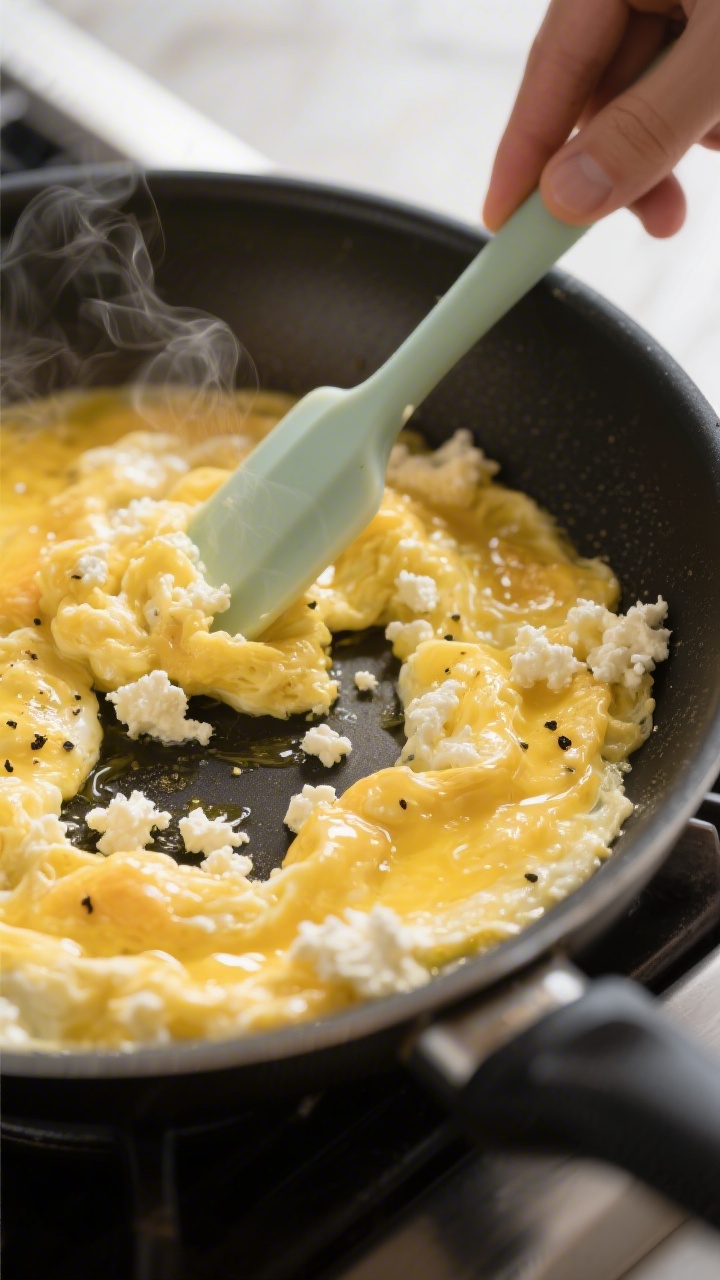
This is more than just scrambled eggs with a spoonful of cheese. The cottage cheese blends with the eggs (learn more about using blended cottage cheese for ultra-smooth recipes)as they cook, creating a custardy, cloud-like texture.
Even better, it adds a serious protein boost without extra fuss. The flavor is mild and clean, which means it pairs well with herbs, hot sauce, or veggies. And because cottage cheese brings moisture, the eggs stay tender—even if you cook them a minute longer than ideal.
- Super high protein: Eggs plus cottage cheese pack in 25–35 grams of protein per serving depending on portion size.
- Creamier texture: Cottage cheese keeps the eggs soft and fluffy.
- Quick and flexible: Ready in under 10 minutes and easy to customize.
- Great for meal prep: Reheats better than plain scrambled eggs.If you prefer something portioned and portable, try these High-Protein Cottage Cheese Egg Bites.
What You’ll Need
- Eggs: 3 large eggs (or 4 if you’re extra hungry).
- Cottage cheese: 1/4 to 1/3 cup, small-curd works best (2% or 4% for creamier results).
- Butter or olive oil: 1 teaspoon for the pan.
- Salt and black pepper: To taste.
- Optional flavor boosters:
- Chopped chives, green onion, or parsley
- Garlic powder or a pinch of onion powder
- Hot sauce, chili flakes, or everything bagel seasoning
- Grated Parmesan or sharp cheddar (1–2 tablespoons)
- Optional add-ins:
- Spinach, cherry tomatoes, or mushrooms (pre-cooked)
- Diced ham, smoked salmon, or turkey
- Avocado for serving
Instructions
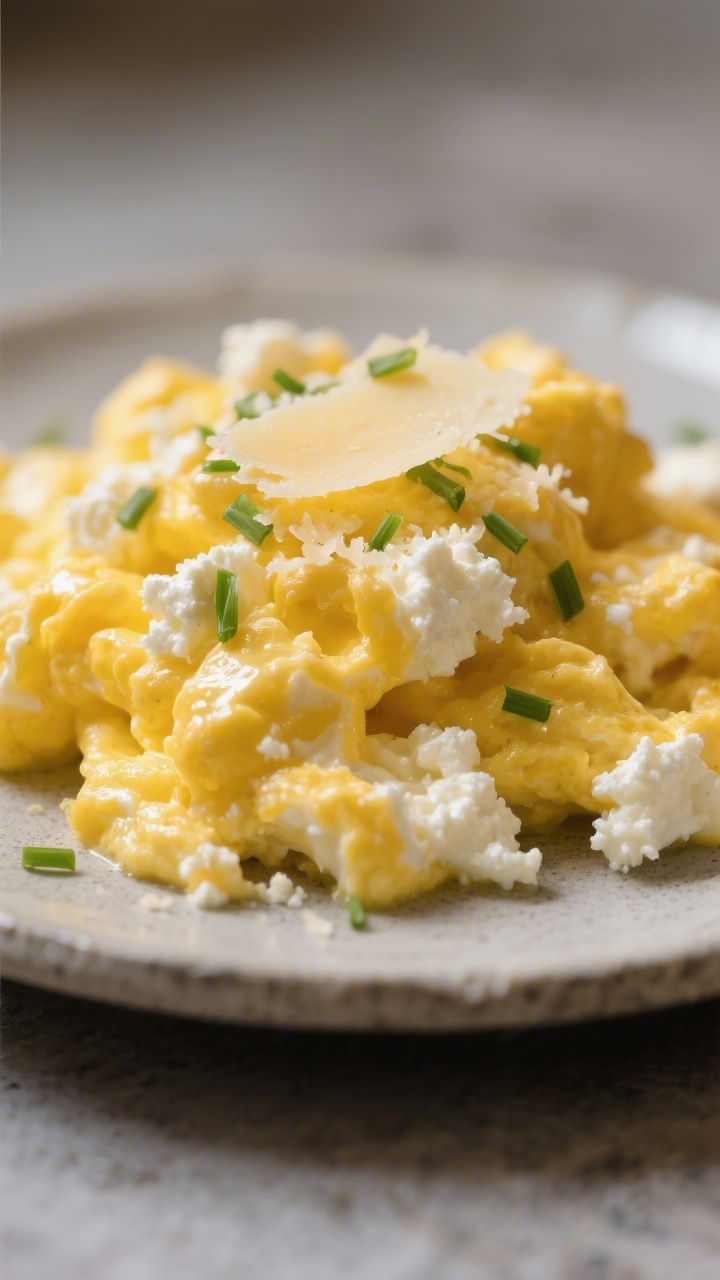
- Beat the eggs lightly. Crack the eggs into a bowl and whisk just until the whites and yolks are mostly combined.Don’t overbeat—you want a bit of body left.
- Stir in the cottage cheese. Fold in 1/4 to 1/3 cup cottage cheese. Mix until evenly distributed but not completely smooth. Small curds are your friend here.
- Season simply. Add a pinch of salt and a few grinds of black pepper.If using garlic or onion powder, add a small pinch now.
- Heat the pan low and slow. Set a nonstick skillet over low to medium-low heat. Add butter or oil and let it melt, coating the surface.
- Cook gently. Pour in the egg mixture. Let it sit for 10–15 seconds, then use a silicone spatula to slowly push the eggs from the edges toward the center, forming soft folds.
- Add any pre-cooked mix-ins. If you’re using sautéed veggies or cooked meat, fold them in when the eggs are still glossy but starting to set.
- Pull off the heat early. When the eggs look mostly set with a slight sheen, remove the pan from the heat.Residual heat will finish the job. Overcooking dries them out.
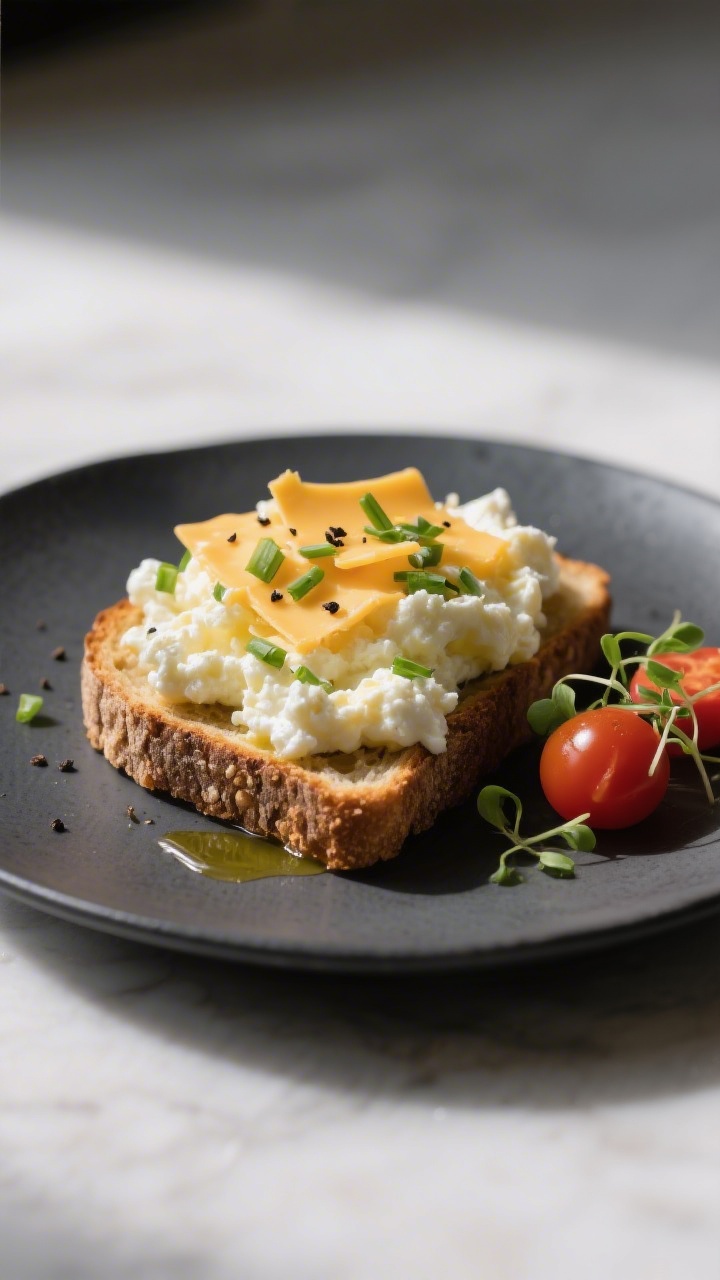
- Finish and serve. Stir in fresh herbs or a sprinkle of cheese if you like. Taste and adjust salt.Serve on warm toast, in a tortilla, or straight from the pan.
Keeping It Fresh
These eggs taste best hot from the pan, but you can make a batch for the week. Let them cool, then store in an airtight container for up to 3 days. Reheat gently over low heat or in the microwave at 50% power in 20–30 second bursts, stirring in between.
To revive texture, add a teaspoon of cottage cheese or a splash of milk while reheating.
If you’re meal prepping, cook the eggs to just shy of done. They’ll finish as you reheat. Keep toppings like herbs, hot sauce, and avocado separate until serving.
Health Benefits
- High-quality protein: Eggs and cottage cheese deliver complete proteins that support muscle repair and steady energy.
- Filling without being heavy: The protein-fat combo keeps you satisfied longer, which can help with appetite control.
- Micronutrients that matter: You’ll get B vitamins, choline for brain health, selenium, and calcium (especially if you use 2–4% cottage cheese).
- Flexible for different goals: Choose low-fat cottage cheese for fewer calories, or 4% for creamier texture and better satiety.
Common Mistakes to Avoid
- Cooking on high heat: This leads to watery, rubbery eggs.Keep the heat low and be patient.
- Adding mix-ins too early: Raw veggies release water and make eggs soggy. Pre-cook them and add near the end.
- Overbeating the eggs: Too much air makes them dry and spongy. Whisk just to combine.
- Skipping seasoning: Eggs need salt.Season before and taste at the end.
- Using large-curd cottage cheese straight from the tub: If curds are big, give them a quick chop or use small-curd for an even texture.
Alternatives
- Greek yogurt swap: Use 2–3 tablespoons of plain Greek yogurt instead of cottage cheese for tangy, creamy eggs.
- Dairy-free option: Blend silken tofu with a pinch of nutritional yeast and turmeric, then fold into beaten eggs or use it to make a tofu scramble.
- Herb-forward version: Stir in chopped dill, chives, and parsley with lemon zest for a fresh twist.
- Spicy version: Add chili crisp or diced jalapeño, and finish with a drizzle of hot honey.
- Veggie-heavy: Sauté mushrooms, spinach, and tomatoes first, then add to the eggs near the end so they stay tender.
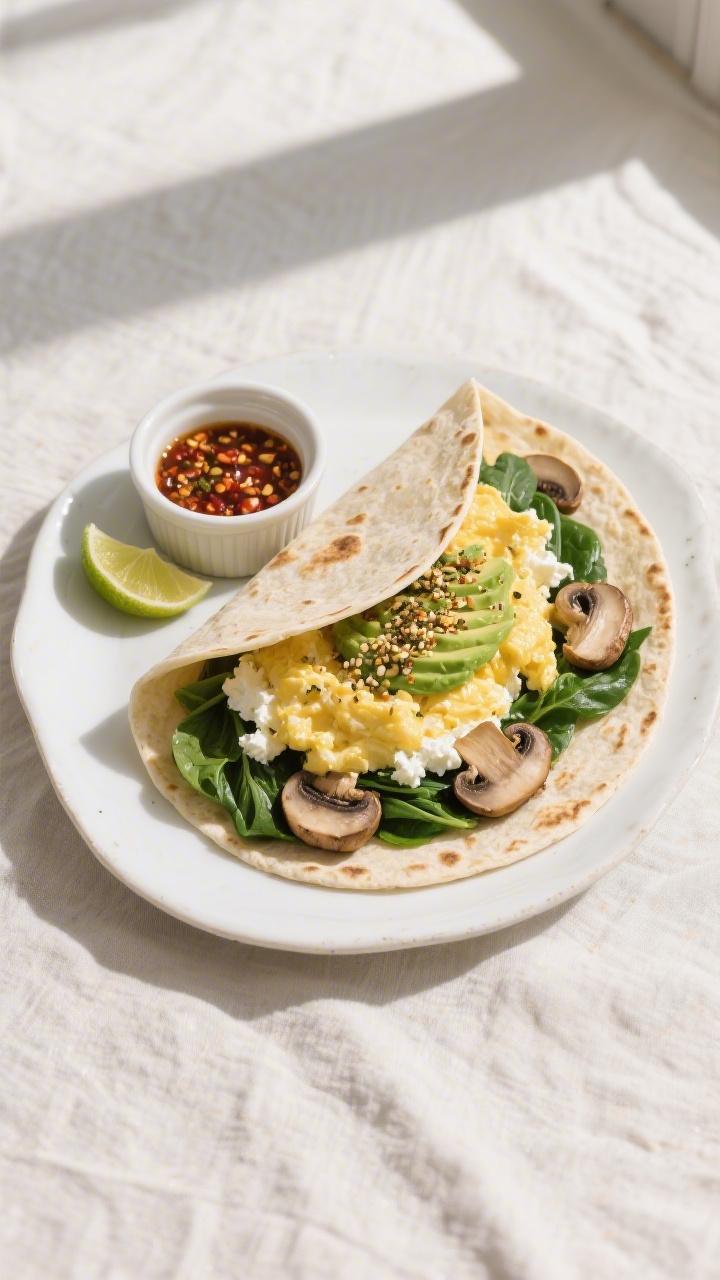
- Breakfast wrap: Spoon the eggs into a warm tortilla with avocado and salsa for a grab-and-go meal.
FAQ
Will the eggs taste like cottage cheese?
Not really. The cottage cheese melts into the eggs and mostly disappears. It adds creaminess and mild richness without a strong cheesy flavor.
Can I use fat-free cottage cheese?
Yes, but the texture won’t be as silky and it may release a bit more liquid.
If using fat-free, cook on slightly lower heat and pull the eggs off the heat earlier.
How do I prevent watery eggs?
Cook on low heat and avoid raw, watery mix-ins. If using tomatoes or mushrooms, sauté them first to drive off moisture. Also, don’t overcook—the longer they go, the more water they release.
Can I make this with egg whites only?
Yes.
Use 4–5 egg whites plus 1/4 cup cottage cheese. Add a touch of olive oil or a teaspoon of butter for better texture and flavor.
What’s the best pan to use?
A nonstick skillet is ideal. Stainless steel can work if it’s well-heated and lightly greased, but nonstick helps you achieve those soft folds without sticking.
Can I blend the cottage cheese first?
Absolutely.
Blending makes it ultra-smooth if you don’t like curds. A quick blitz in a mini blender turns it into a creamy base that disappears into the eggs.
How do I scale this up?
Double or triple the recipe and cook in batches to avoid crowding the pan. Too much egg mixture at once can steam instead of scramble.
What should I serve with it?
Whole-grain toast, avocado, fruit, or a simple side salad all work well.
For extra protein, add smoked salmon or turkey on the side.
Wrapping Up
High-Protein Cottage Cheese Scrambled Eggs are simple, fast, and genuinely satisfying. The cottage cheese does the heavy lifting—creamy texture, extra protein, and a clean flavor that plays well with anything. Keep the heat low, season well, and pull them off early for perfect results.
Whether you’re cooking for one or meal prepping for the week, this is a reliable breakfast you’ll actually look forward to.
Printable Recipe Card
Want just the essential recipe details without scrolling through the article? Get our printable recipe card with just the ingredients and instructions.